
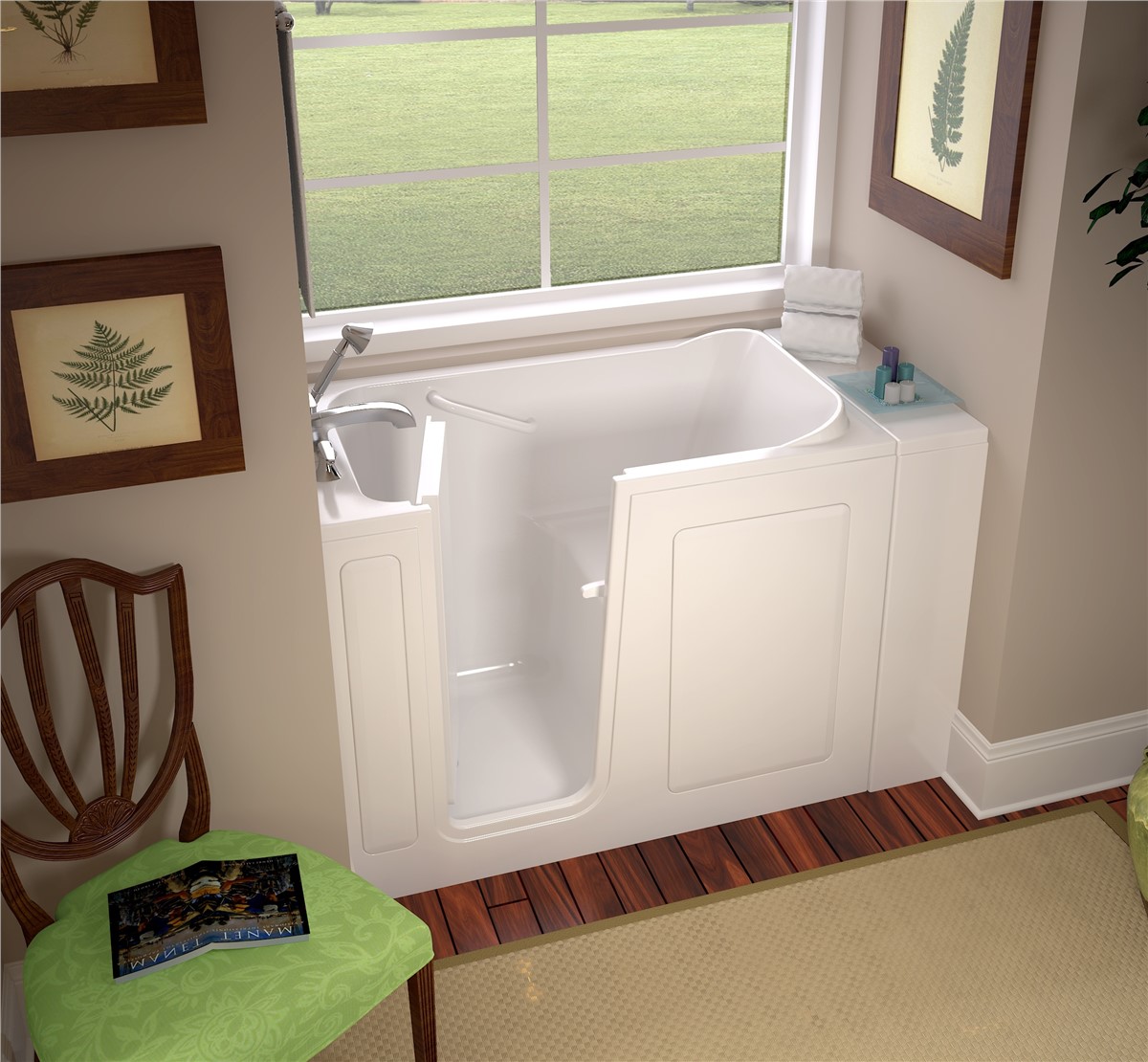
For many older adults, the bathroom is the most hazardous room in the house. Slippery surfaces, tall tub walls, and limited mobility add up to a real fall risk. That is why walk-in tubs are gaining popularity among Albuquerque seniors and their families who want to stay safely and comfortably in their own homes. Whether you live in a Northeast Heights ranch, a North Valley adobe, or a condo near Nob Hill, this guide explains how walk-in tubs work, what they cost, and whether one is the right choice for you.
What Is a Walk-In Tub?
A walk-in tub has a watertight door built into the side, so you step through a low threshold instead of climbing over a high wall. Once inside, you sit on a built-in seat, close and seal the door, and fill the tub. When you finish, you drain the water before opening the door.
Most models include a seat at a comfortable height, a taller wall for deeper soaking, and grab bars. Many also offer therapeutic features that can ease sore joints, which is a welcome benefit in our dry, high-altitude climate where stiffness and dry skin are common complaints.
Key Safety Features to Look For
Not all walk-in tubs are equal. Prioritize these features:
- Low step-in threshold: Look for a height that matches your mobility needs.
- Slip-resistant flooring: Textured surfaces reduce the chance of slipping.
- Built-in grab bars: Sturdy, well-placed bars help with sitting, standing, and balance.
- Comfort-height seating: A seat around 17 to 19 inches high is easier to use.
- Leak-proof door seal: A quality seal and a secure latch prevent leaks.
- Fast-drain system: Dual or quick drains shorten the time you wait inside the tub.
- Anti-scald protection: Thermostatic or temperature-limiting valves guard against burns.
- Handheld showerhead: Useful for rinsing and for caregivers assisting a bather.
- Emergency options: Some models allow easy access to a call button or phone.
One important consideration is the fill and drain time. Because you stay in the tub while it fills and drains, a heated surface or insulated design helps keep you warm. Always ask how long each process takes.
Types of Walk-In Tubs
Soaker Tubs: The simplest and most affordable option. They provide a deep soak and safe entry without extra features.
Air Tubs: Thousands of tiny air bubbles gently massage the body. They are quiet, easy to clean, and typically gentler than jets.
Hydrotherapy (Whirlpool) Tubs: Water jets target the back, hips, legs, and feet for deeper massage. These are popular with people managing arthritis or muscle soreness.
Combination Tubs: These pair air and water jets, sometimes with chromatherapy lighting or aromatherapy features, for a full spa-style experience.
Wheelchair-Accessible and Bariatric Models: Wider openings, outward-swinging doors, and expanded seating accommodate transfer needs and larger users.
Walk-In Tub and Shower Combos: These add a showerhead so you can bathe either way, which is a great option for households with different preferences.
How Much Do Walk-In Tubs Cost?
Most Albuquerque homeowners should plan for the following ranges, including installation:
- Basic soaker models: $6,000 to $12,000
- Mid-range air or hydrotherapy tubs: $10,000 to $20,000
- Premium or specialty models: $18,000 to $30,000 or more
Installation can add several thousand dollars, especially if plumbing needs to be moved, the floor needs reinforcing, or a new electrical circuit is required for jets and heaters. New Mexico gross receipts tax applies to construction services, so confirm whether tax is included in the price you are quoted. Be cautious about advertisements showing very low “starting at” prices, since those often exclude installation and key features.
Are There Ways to Pay for It?
Costs can feel steep, but options may help:
- Medicare: Original Medicare generally does not cover walk-in tubs, since they are not typically classified as durable medical equipment. Check with your plan for any details.
- Medicaid waivers: New Mexico’s home and community-based programs may help with certain accessibility modifications for eligible residents. Ask the state or your care coordinator.
- Veterans benefits: The VA offers home modification grants for qualifying veterans with service-connected or other eligible disabilities.
- Medical expense deductions: Some home modifications may qualify as deductible medical expenses. Talk with a tax professional.
- Financing: Many dealers and contractors offer payment plans. Compare interest rates and terms carefully.
Walk-In Tub or Walk-In Shower?
A walk-in tub is not always the best answer. Consider these factors:
Choose a walk-in tub if:
- You enjoy soaking and want therapeutic benefits.
- You have joint pain or arthritis and find warm water helpful.
- You can sit and stand safely with some support.
Consider a walk-in shower if:
- You prefer quick showers and do not want to wait for filling and draining.
- You use a wheelchair or walker and need roll-in access.
- Space or budget is limited.
A tub-to-shower conversion with a low threshold, bench, and grab bars is often more affordable and just as safe. An honest consultation will help you compare both.
Installation Considerations in Albuquerque Homes
- Space: Many walk-in tubs are larger than standard bathtubs. Measure your bathroom, including door widths.
- Plumbing and electrical: Older homes may need updated supply lines, drains, or a dedicated circuit.
- Water heater capacity: A tub can hold 40 to 80 gallons. Make sure your water heater can keep up, or you may end up with lukewarm water.
- Hard water: Albuquerque’s mineral-rich water can build up inside jets and on fixtures. Regular cleaning and, in some cases, a water softener extend the life of your tub.
- Flooring support: A filled tub is heavy, so the floor must be able to carry the load.
- Permits: Plumbing and electrical changes may require permits through the City of Albuquerque or Bernalillo County.
Choosing a Trustworthy Contractor
Because this is a major investment, vet your installer carefully. Look for a valid New Mexico Construction Industries Division (CID) license, liability insurance, workers’ compensation coverage, and local references. Ask about warranties on the tub, the door seal, and the installation itself. Request a detailed written scope and timeline. Most installations take one to three days, though more complex bathroom modifications may take longer. Be wary of high-pressure sales tactics, large upfront deposits, or “today only” discounts.
Ready to Bathe Safely? Let’s Talk
The right walk-in tubs can help Albuquerque seniors maintain independence, ease aches and pains, and reduce the risk of dangerous falls. The key is choosing a model that fits your body, your bathroom, and your budget, and having it installed correctly by a qualified professional.
Contact us today for a free, no-obligation in-home consultation. Our local team will assess your bathroom, review your safety needs, compare walk-in tubs and alternatives, and provide a clear, itemized quote with no pressure. Call now or request your estimate online to take the first step toward a safer, more comfortable bathroom.